2023 Dec
What does The Algorithm look like?
Building Marriage Pact, I’ve spent a lot of time thinking about how our technology might mediate our relationships.
But recently, some design questions have been nagging at me.
I took Sunday night to explore one: what does The Algorithm look like, and how do I interact with it?
Broadly, our work falls into two camps:
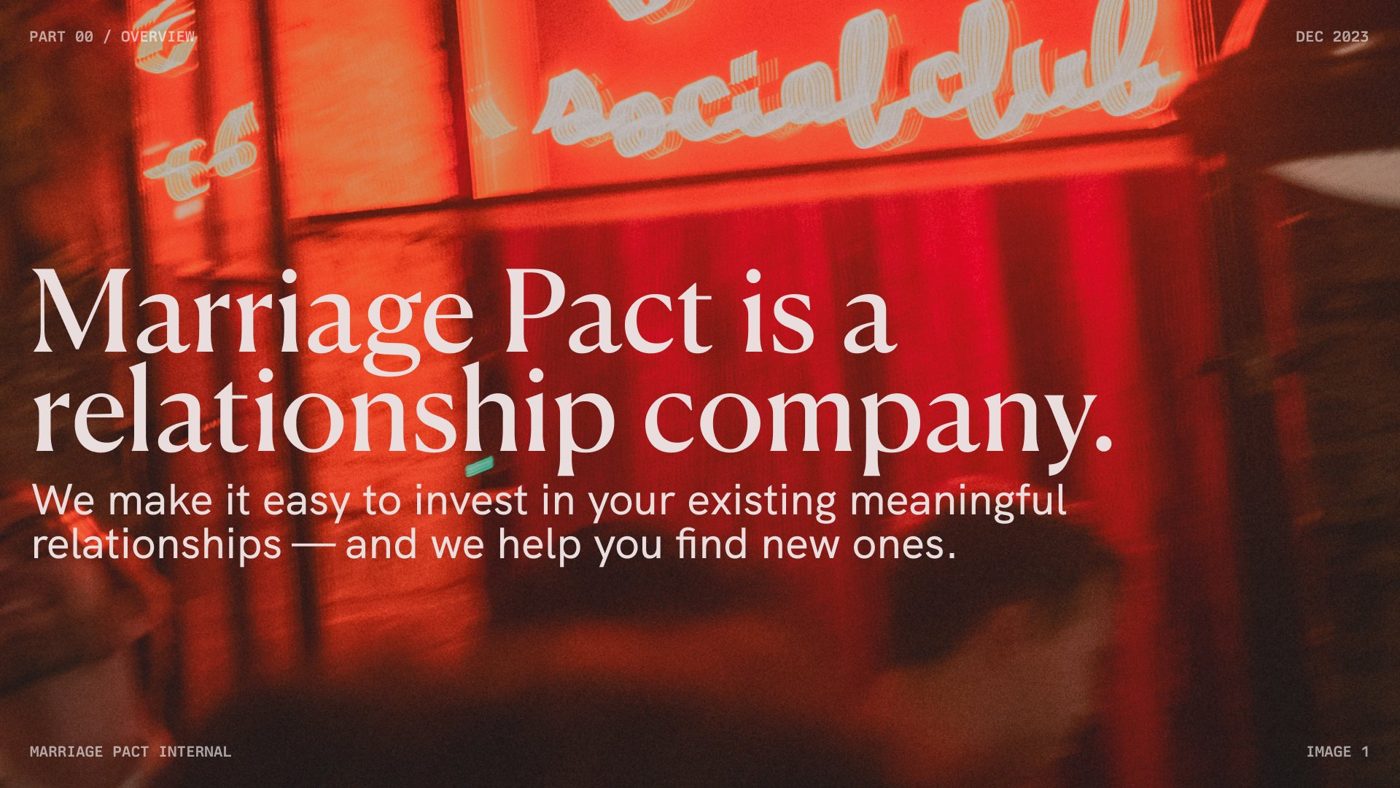
we make it easy to invest in your existing meaningful relationships, and
we help you find new ones.
I think of Marriage Pact as Relationship Company.
We have some decent traction so far:
68,500,000 questions answered
1,800,000 friendships added
360,000 matches made
At Stanford, after 4 years, you’re more likely to have done the Marriage Pact (99%) than you are to have graduated (76%)
Our approach, right now, is to
use insights learned from creating the Marriage Pact match event (450,000 participants at 86 schools)
to design new experiences that anyone can use—like Checkmate, which lets you see your relationship score with anyone (183,000 peak MAUs)
At the center of all of these products is The Algorithm. It predicts the quality of different relationships and makes the best matches possible.
We can do that with decent accuracy because of our high-signal dataset of questions, answers, and relationship outcomes.
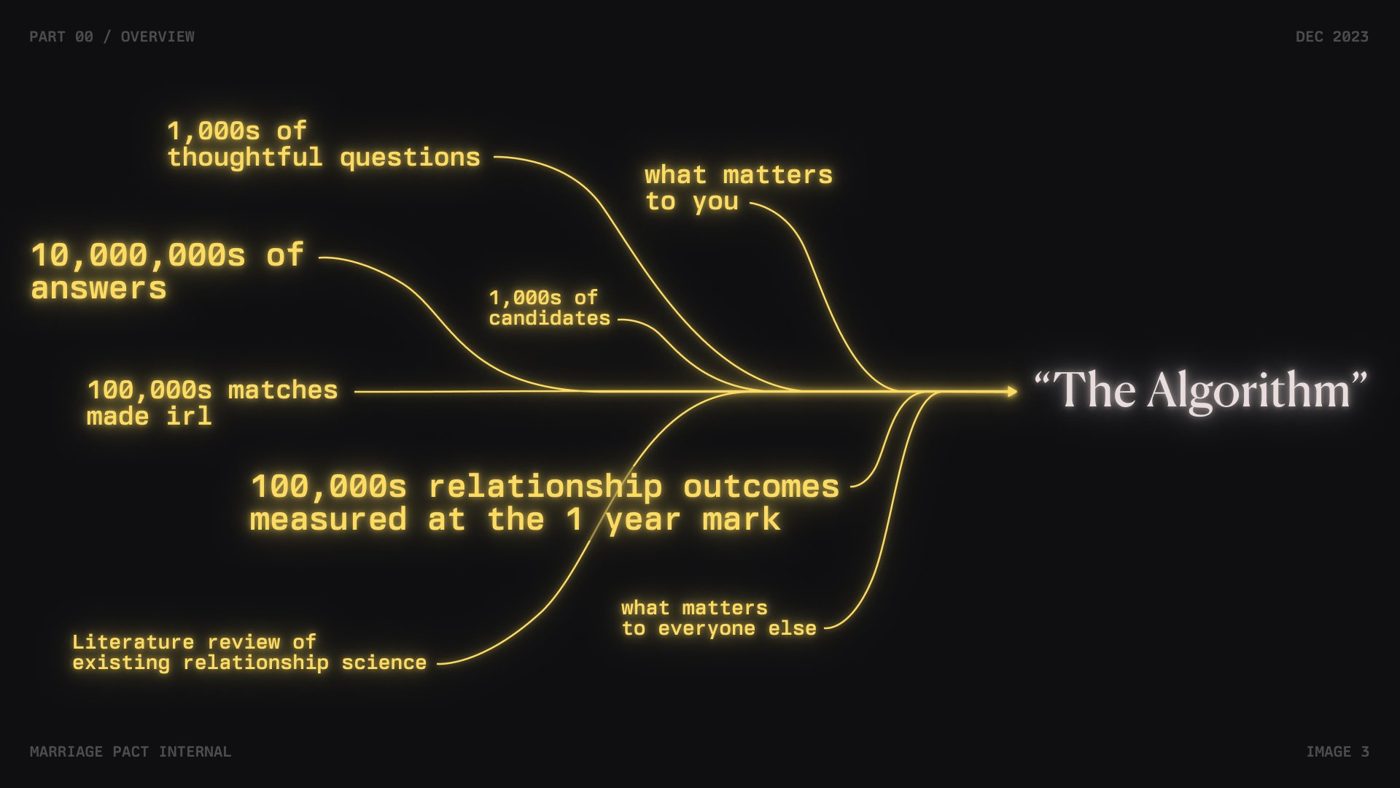
Here are a few interesting design questions that have been nagging at me:
What does The Algorithm look like, and how do I interact with it?
Can we kill static profiles?
How do people feel match quality?
How do you express what matters to you?
I took Sunday night to explore question 1: What does “The Algorithm” look like?
There’s some interesting precedent for what AI, algorithms—or in this case, matchmakers—can look like.
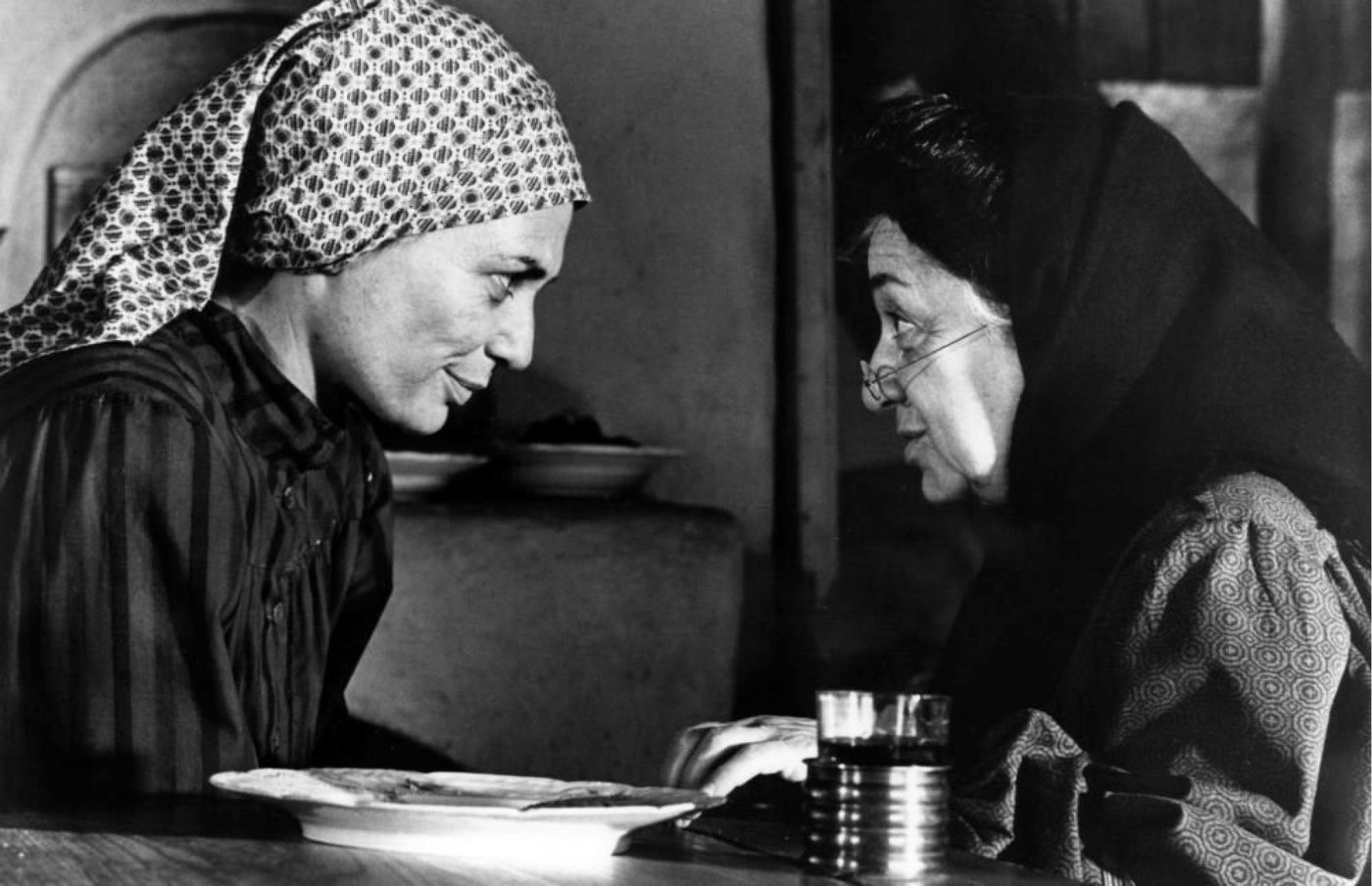
They can be a character
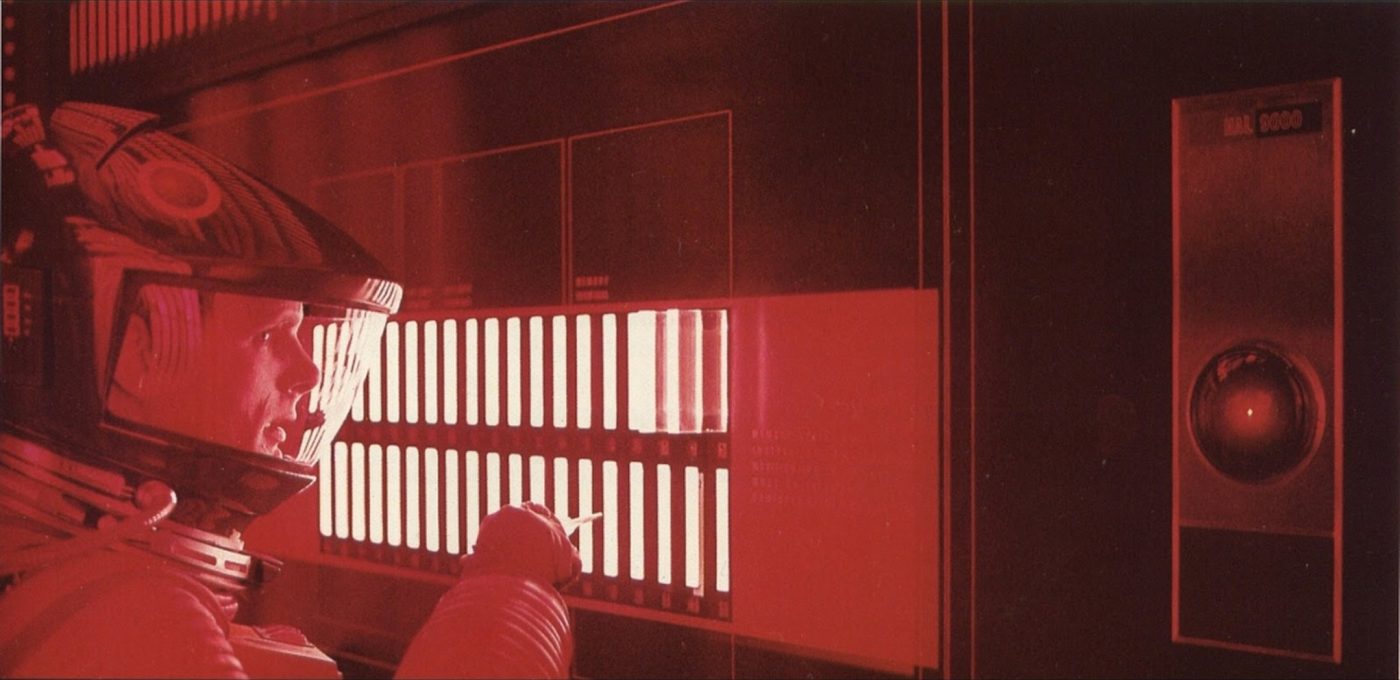
Or a medium
They can be anthropomorphized
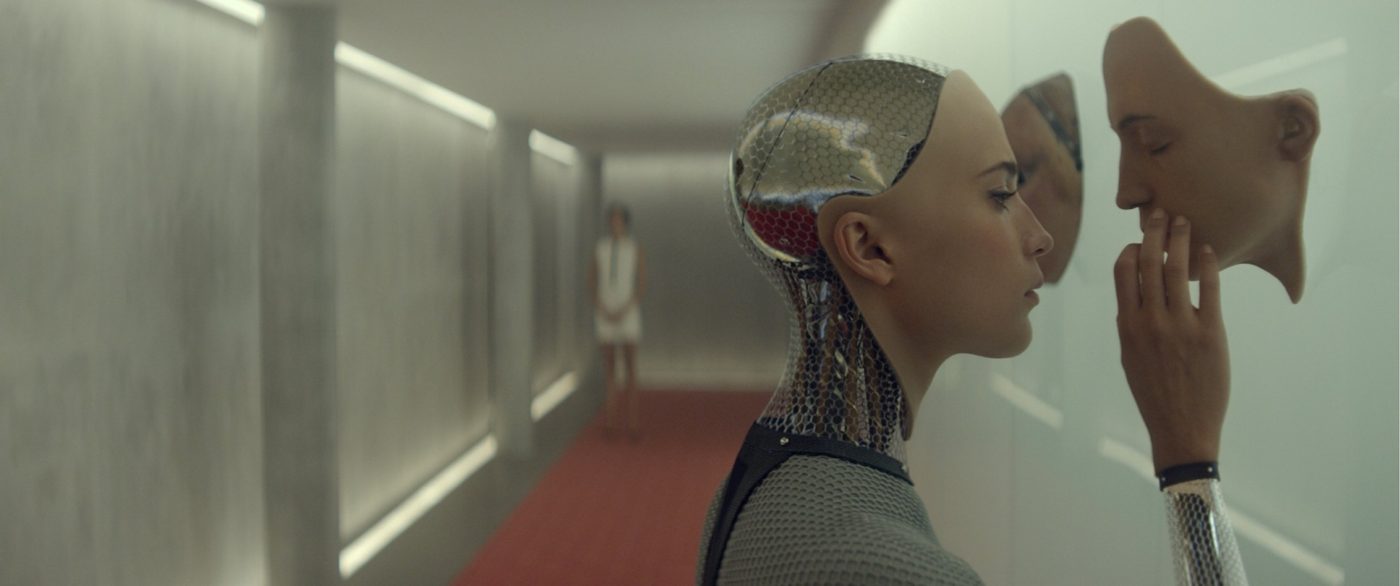
And they can evoke strong emotions
“you look lonely”
They can appear all-knowing
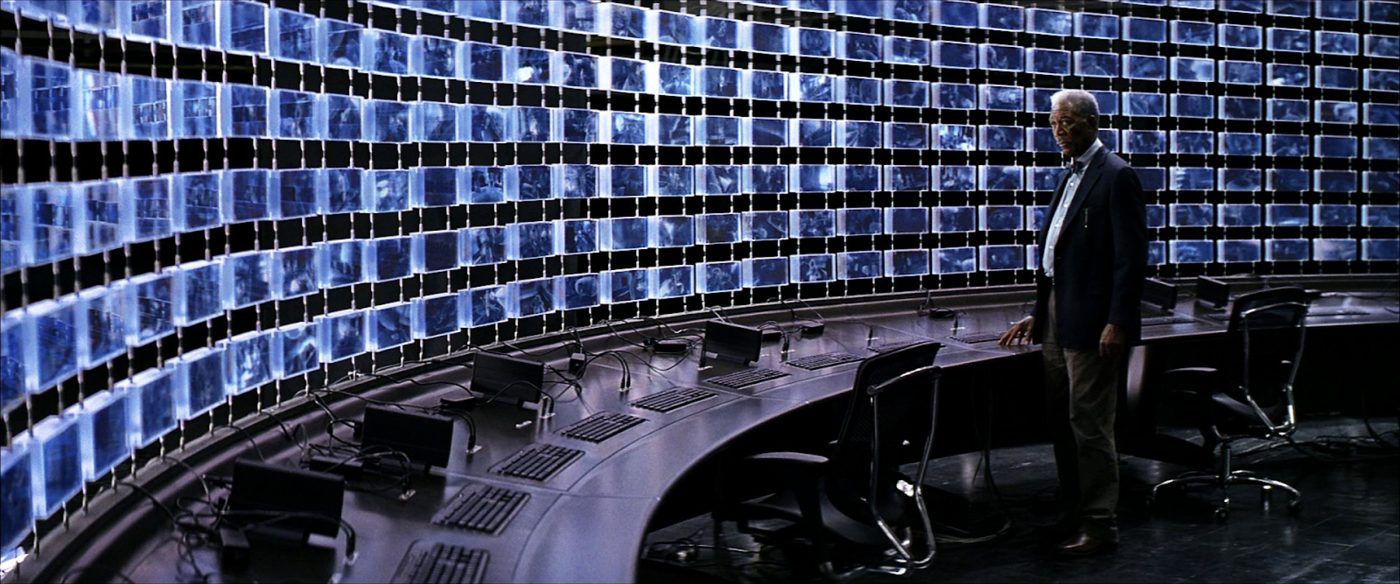
They can be bio-integrated
Or they can be interacted with via mouse & keyboard
In my opinion, the best results seem to come from exploring the beautiful tension between analog and digital
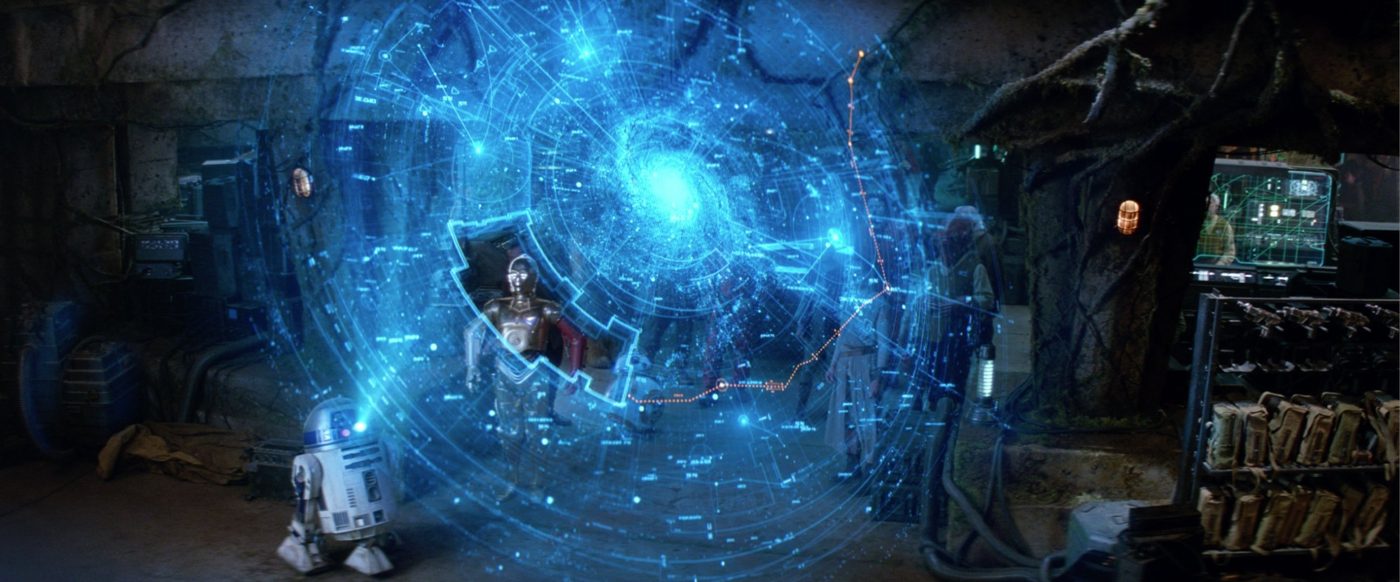
but we care about what The Algorithm, specifically, might look like.
What distinguishes An Algorithm from technology in general?
In our case, it has agency: making proactive introductions and facilitating your meaningful connections.
How might we convey agency, capability, credibility?
Looking at precedent, many beautiful ideas so far have been bio-inspired, mixing radial geometry and visual complexity with technology.
(although this Algorithm turns out to be the bad guy)
Some Algorithms offer proofs of concept
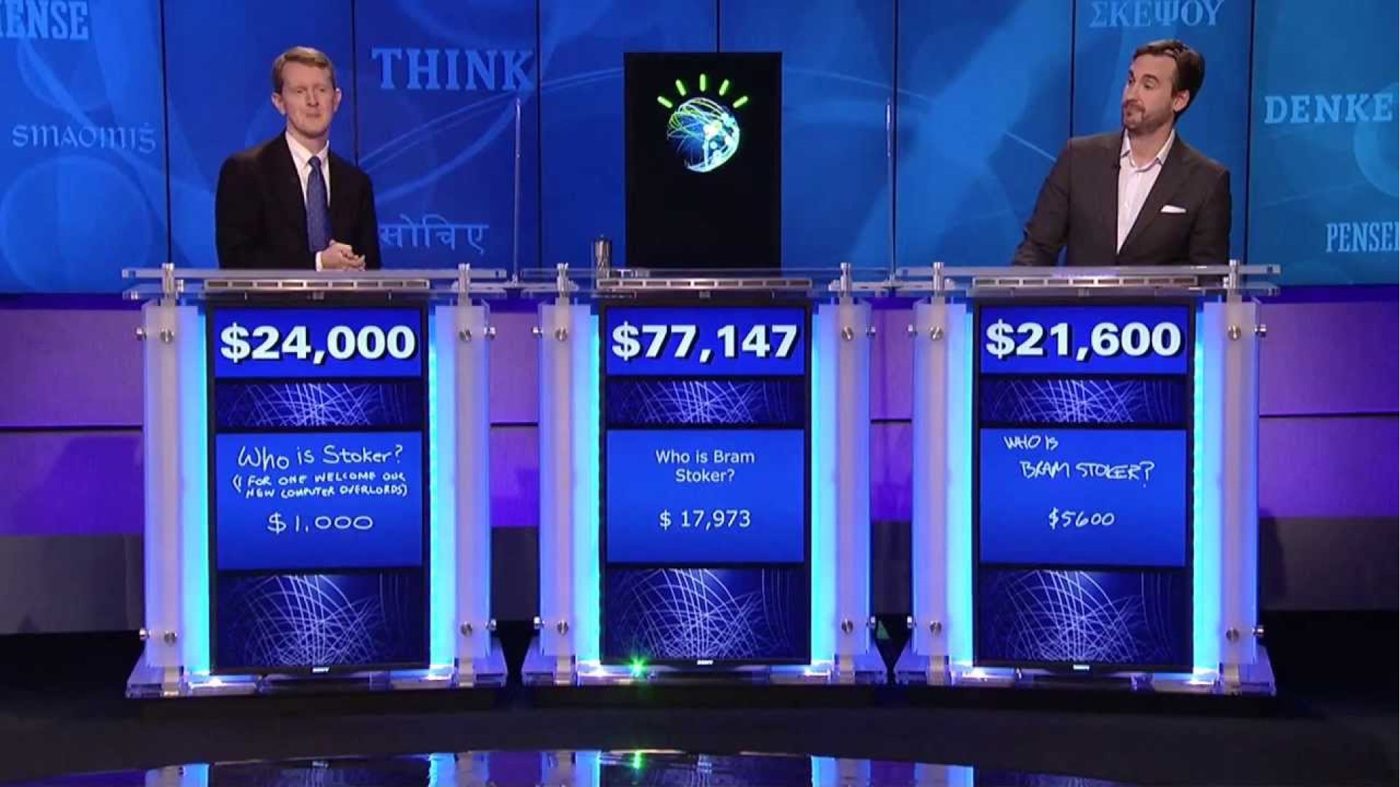
While other Algorithms become reality
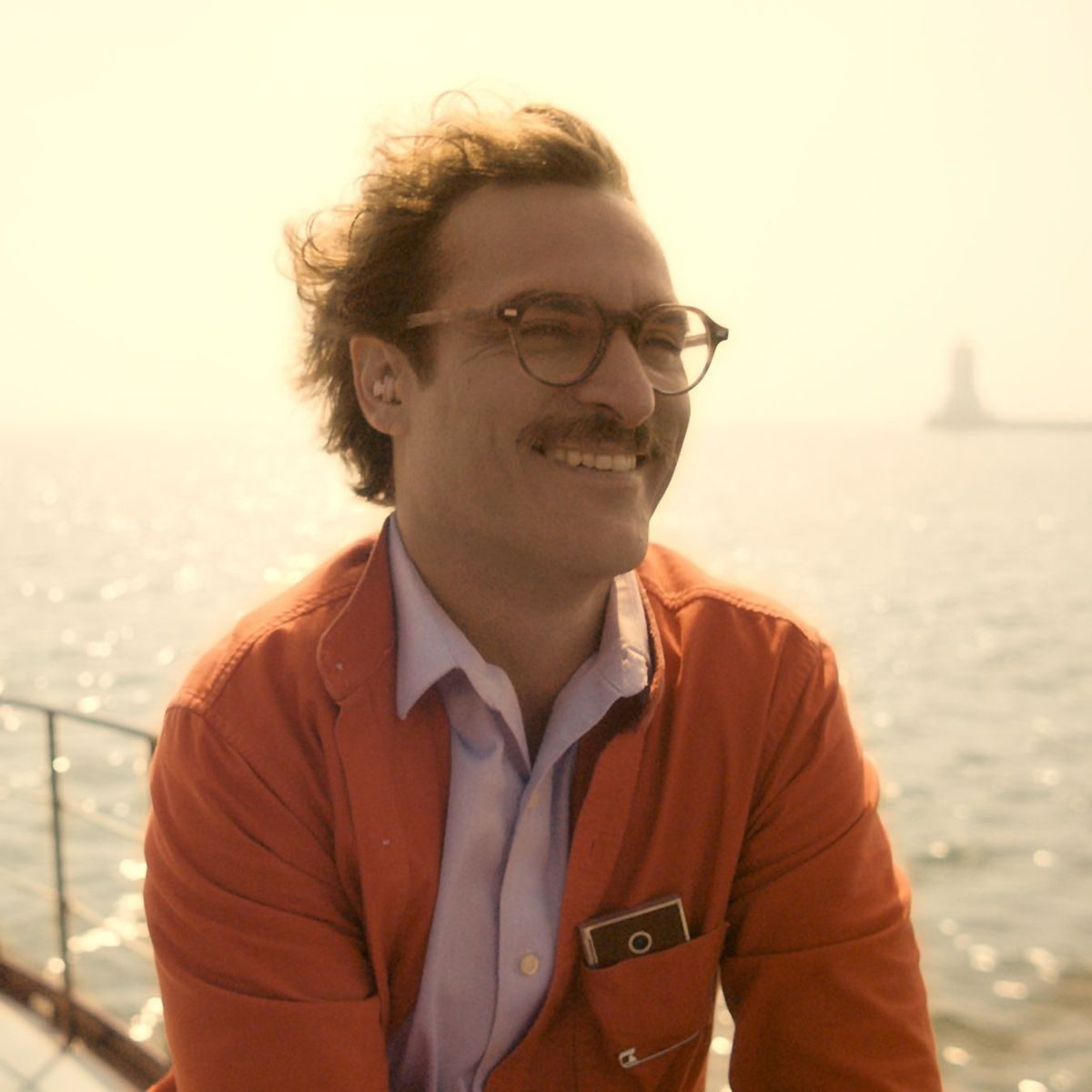
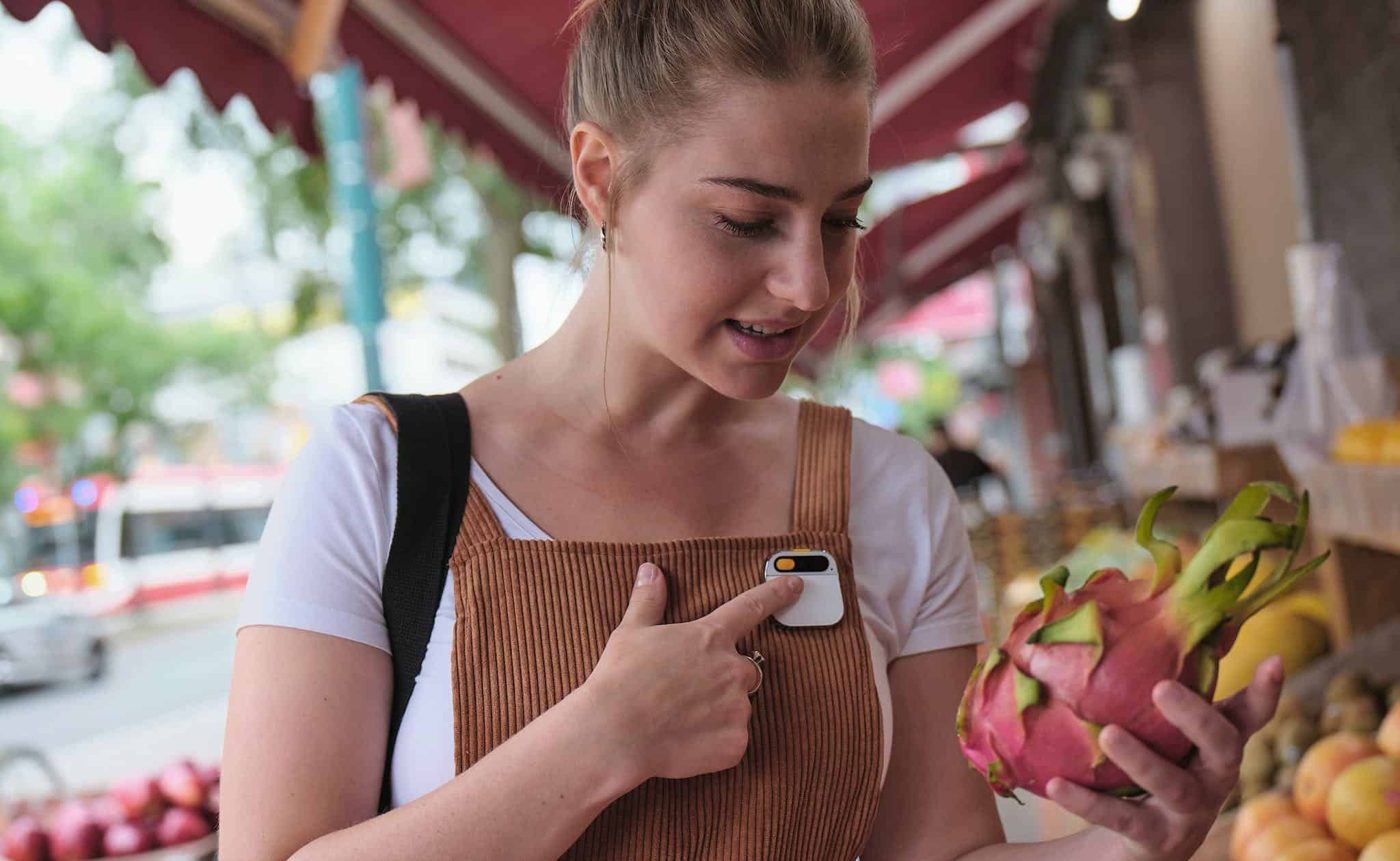
How does The Algorithm look and feel when you interact with it?
Most are uninspired.
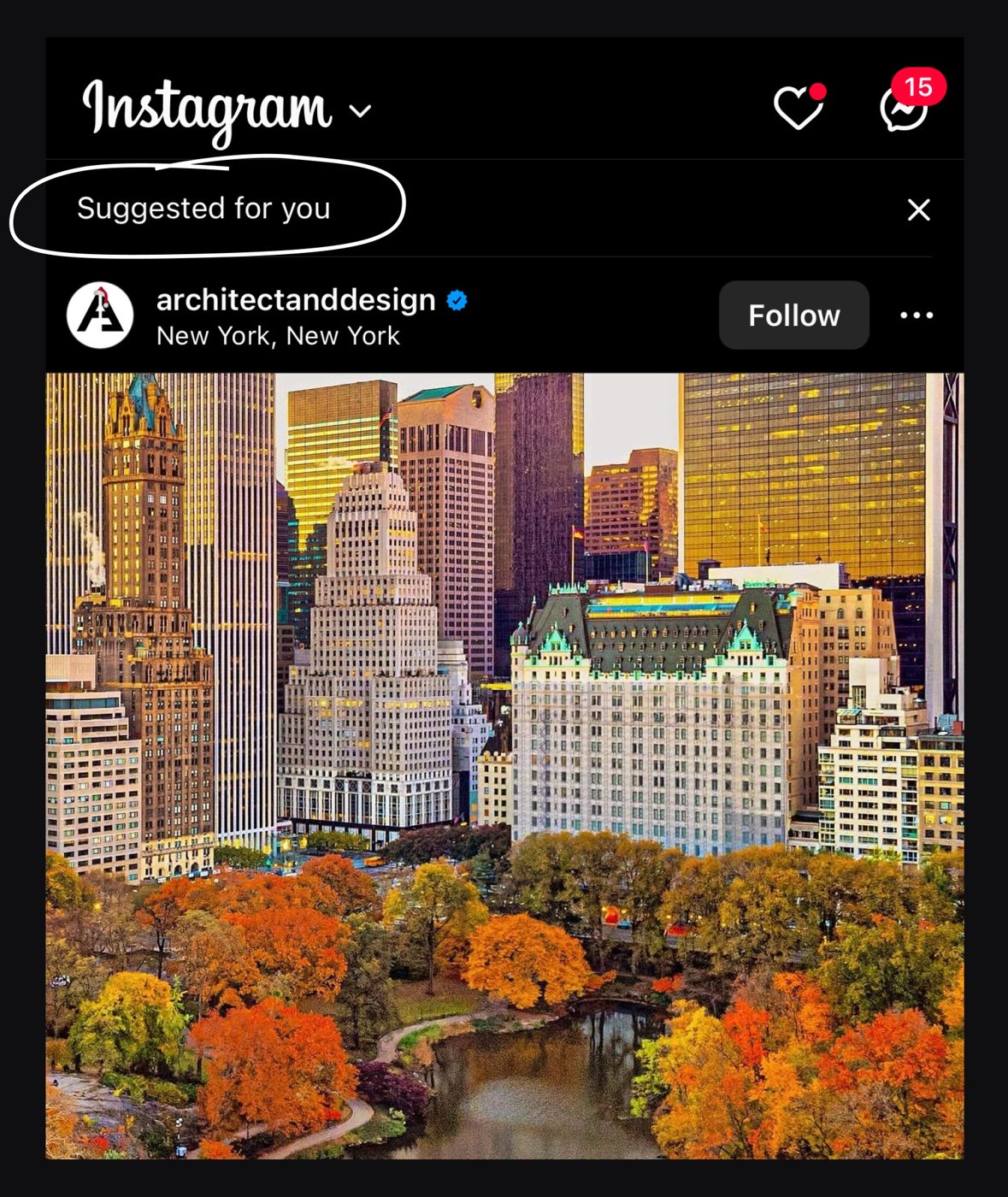
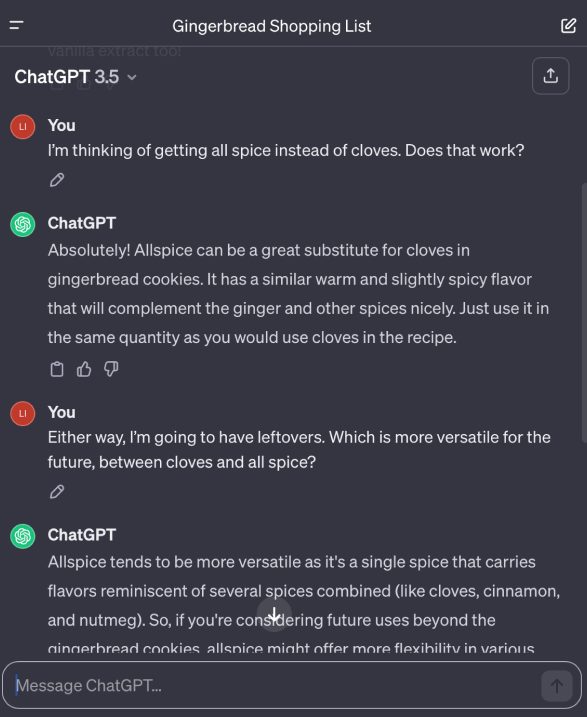
And there’s a disconnect between visibility and capability:
The most beautiful assistant of 2015-25 wasn’t capable of anything…
… while the most powerful algorithms are often felt, but not seen.
What might Our Algorithm look like?
Design principle 1. Balance Complicated and Uncomplicated
from Perception for IBM Debater (2019)
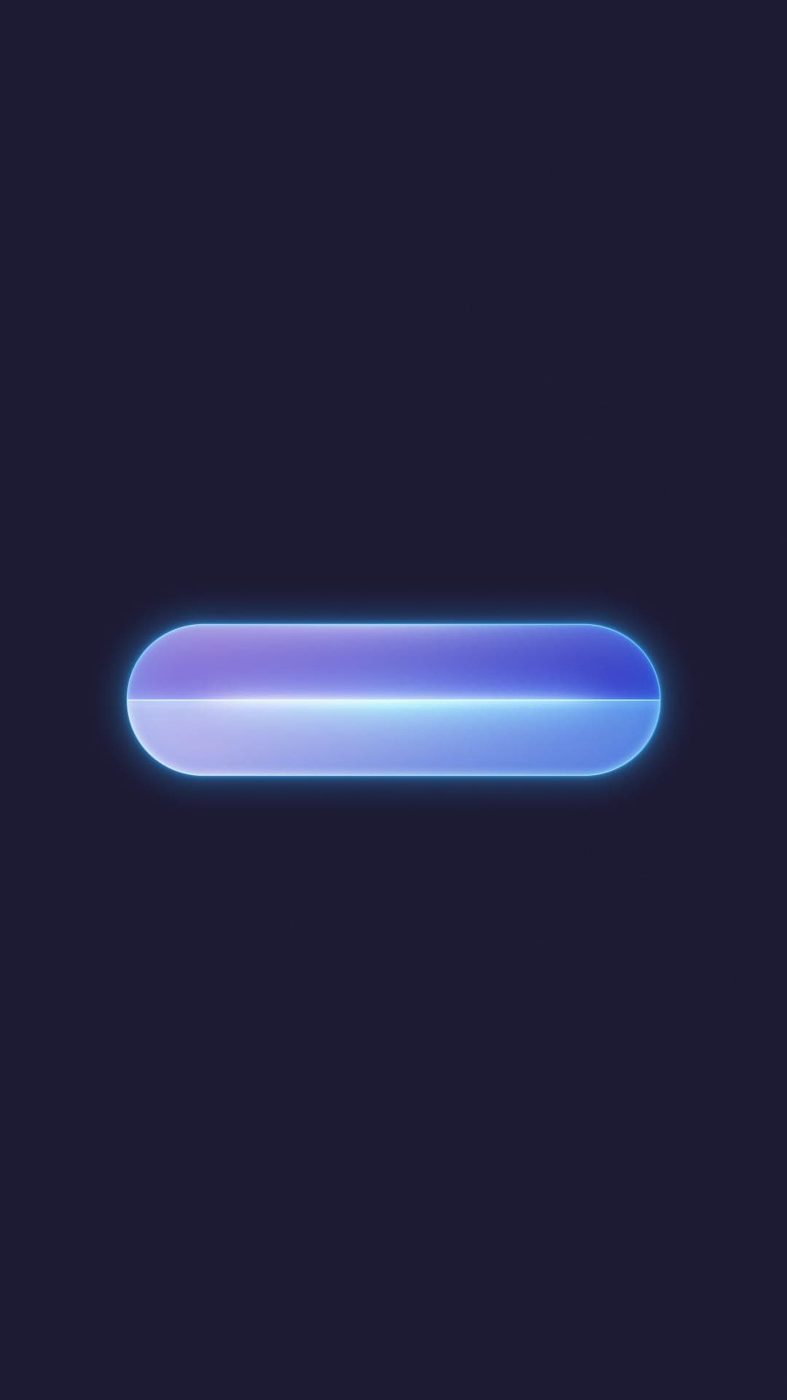
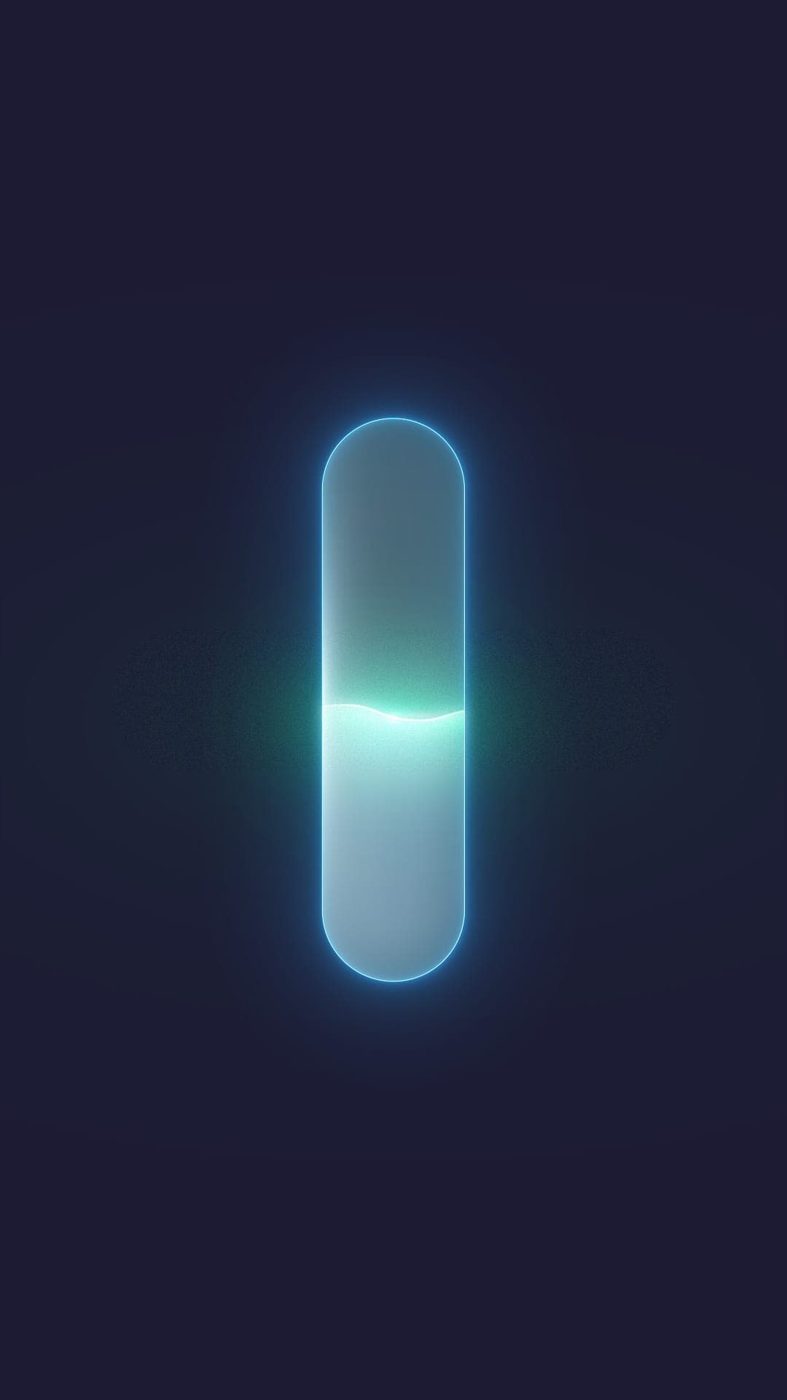
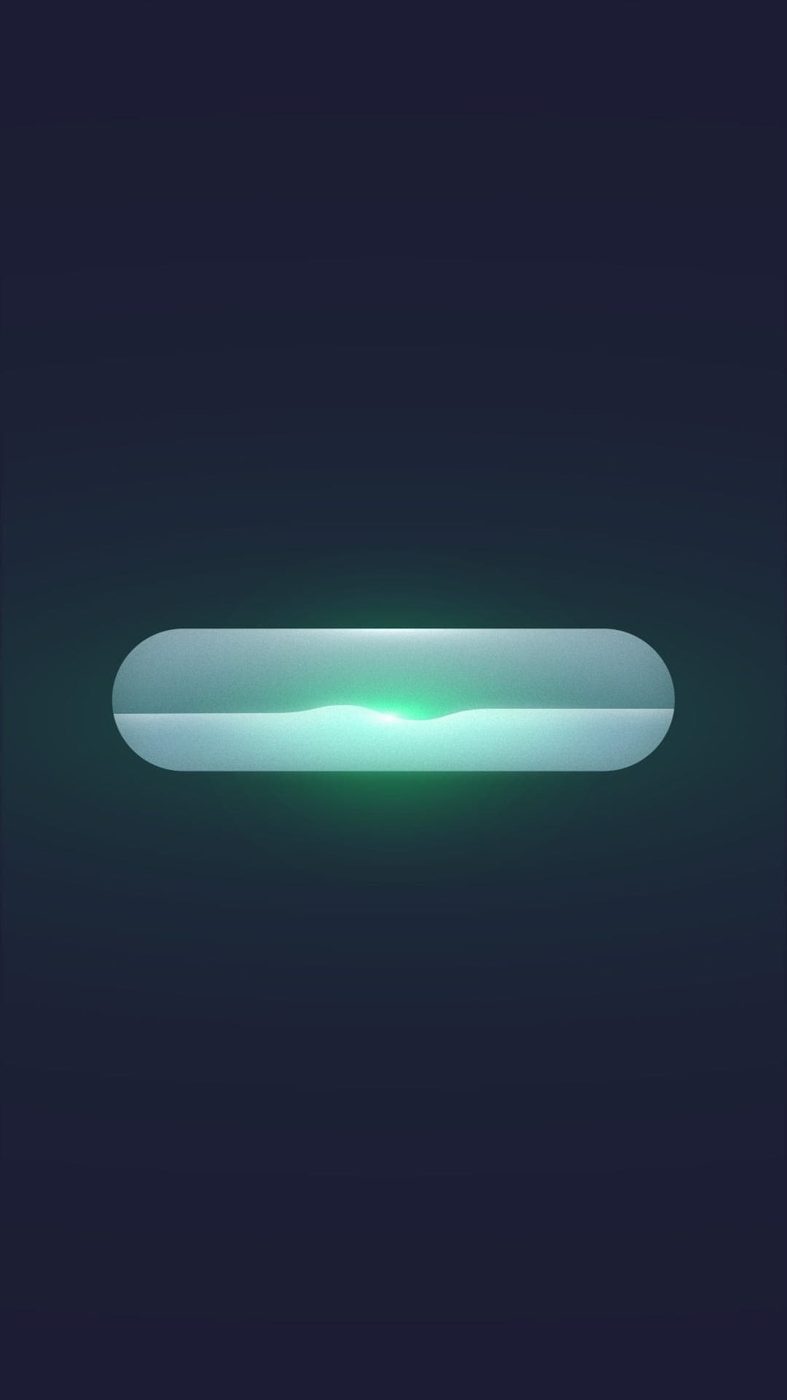
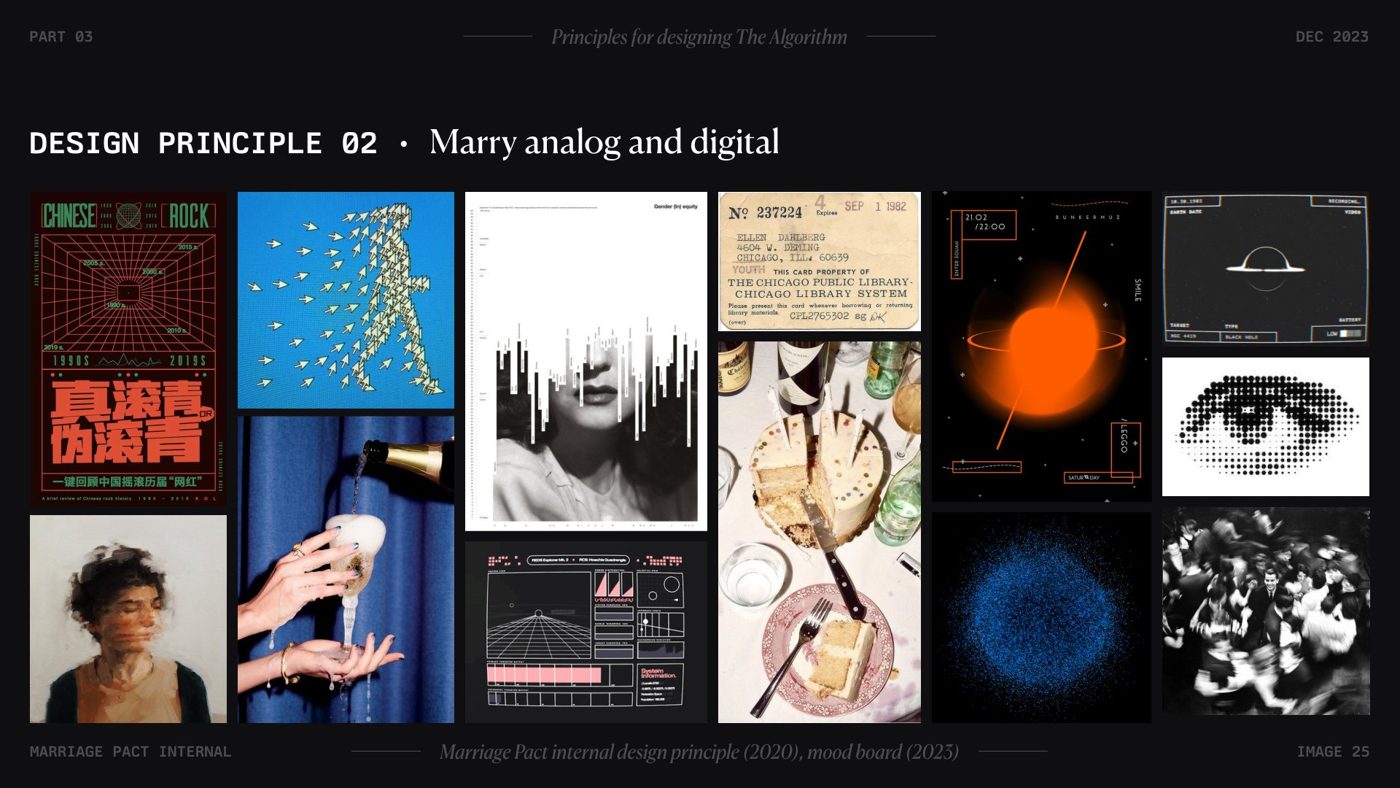
Design principle 2. Marry analog and digital
Marriage Pact internal design principle (2020), mood board (2023)
closeup on Apple’s Proximity Pairing because I love it so much:
Design principle 3. Bridge “science fiction” and “science fact”
from Territory for Dune (2022)
(those “science fact” controls help sell the (science fiction) ornithopters)
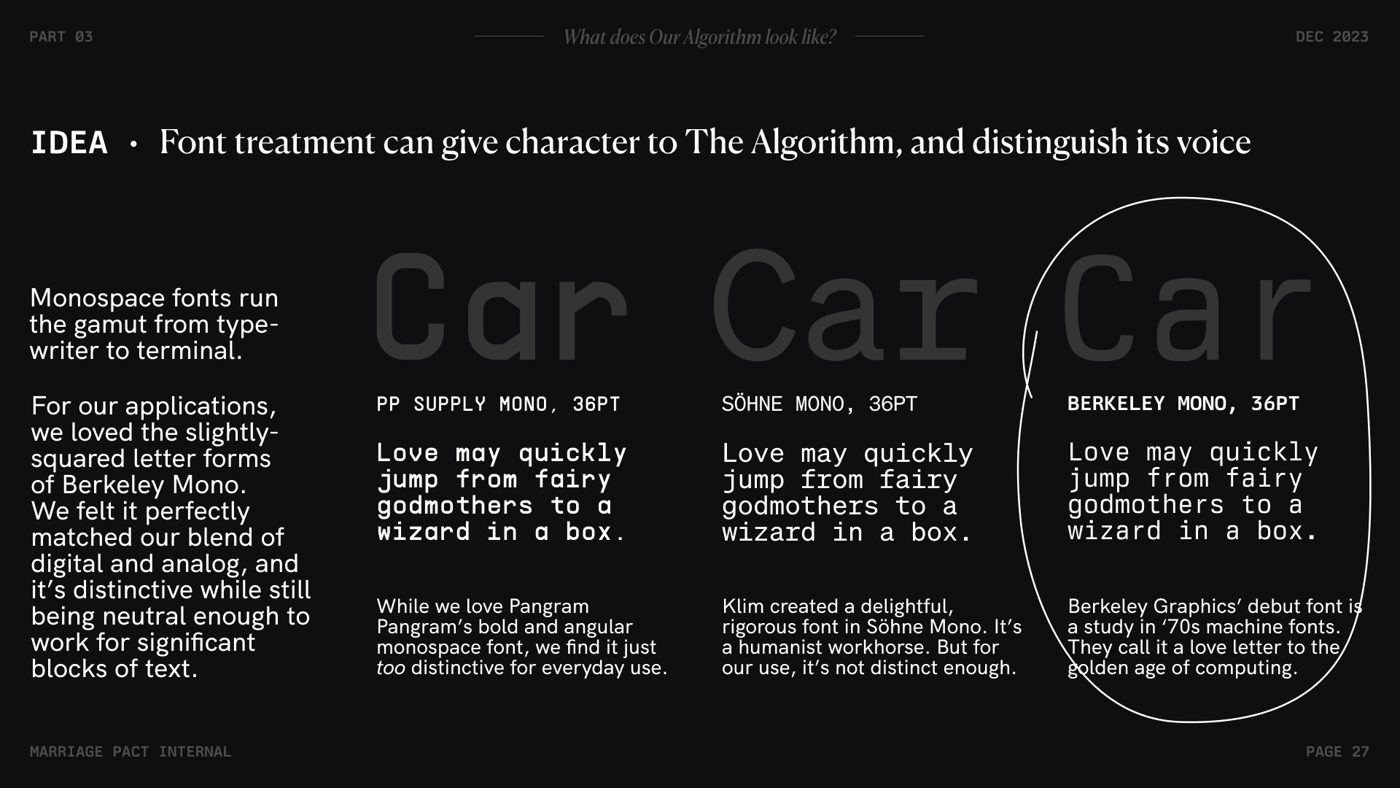
Idea 4. A particular font could distinguish The Algorithm’s voice and give it character
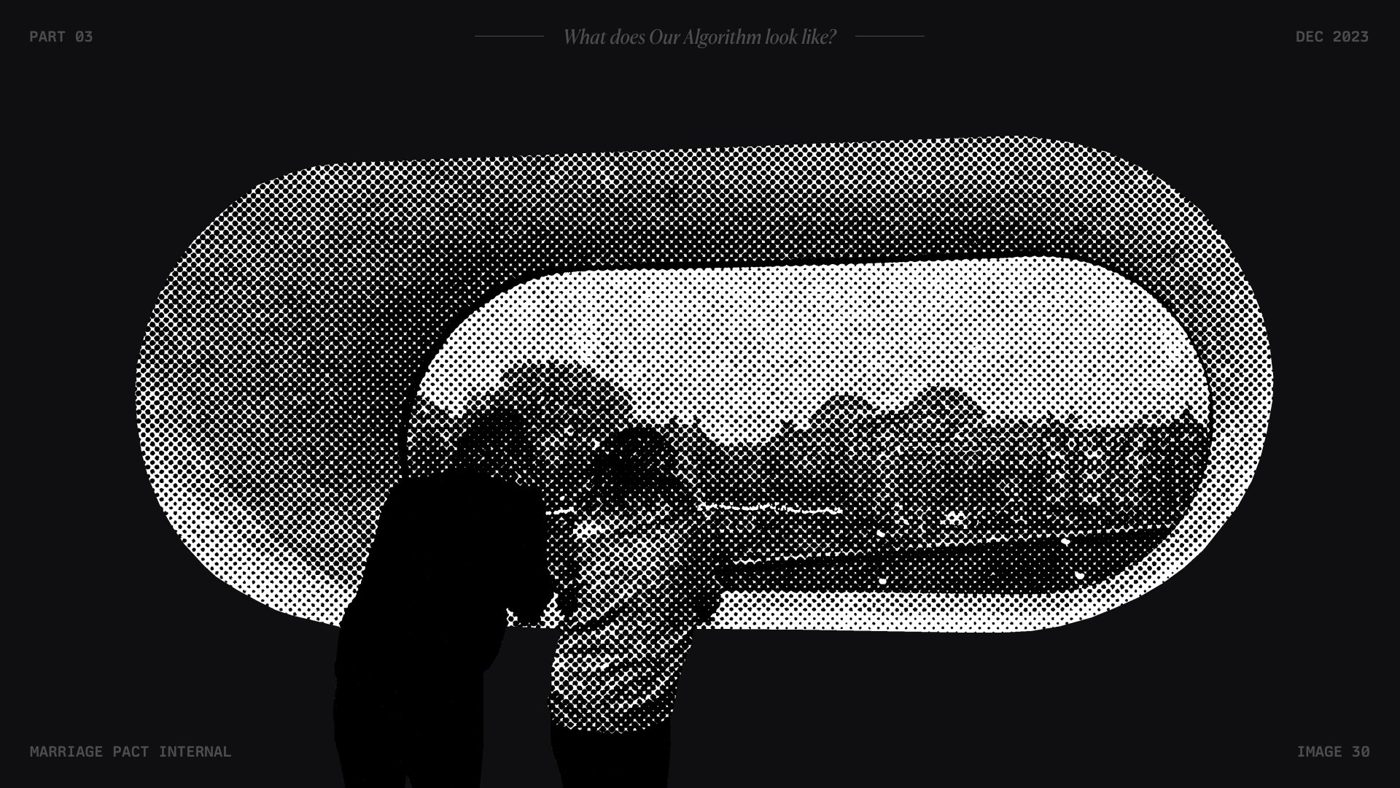
We’ve used patterns, before, that mixed analog & digital…
Halftones offer a very technical (nearly digital) deconstruction of images, and they take on beautiful imperfections of the physical
… but this is, on its own, insufficient to be The Algorithm
Idea 5. Perhaps patterns can create a medium to suggest The Algorithm’s presence
Marriage Pact brand pattern (2022)
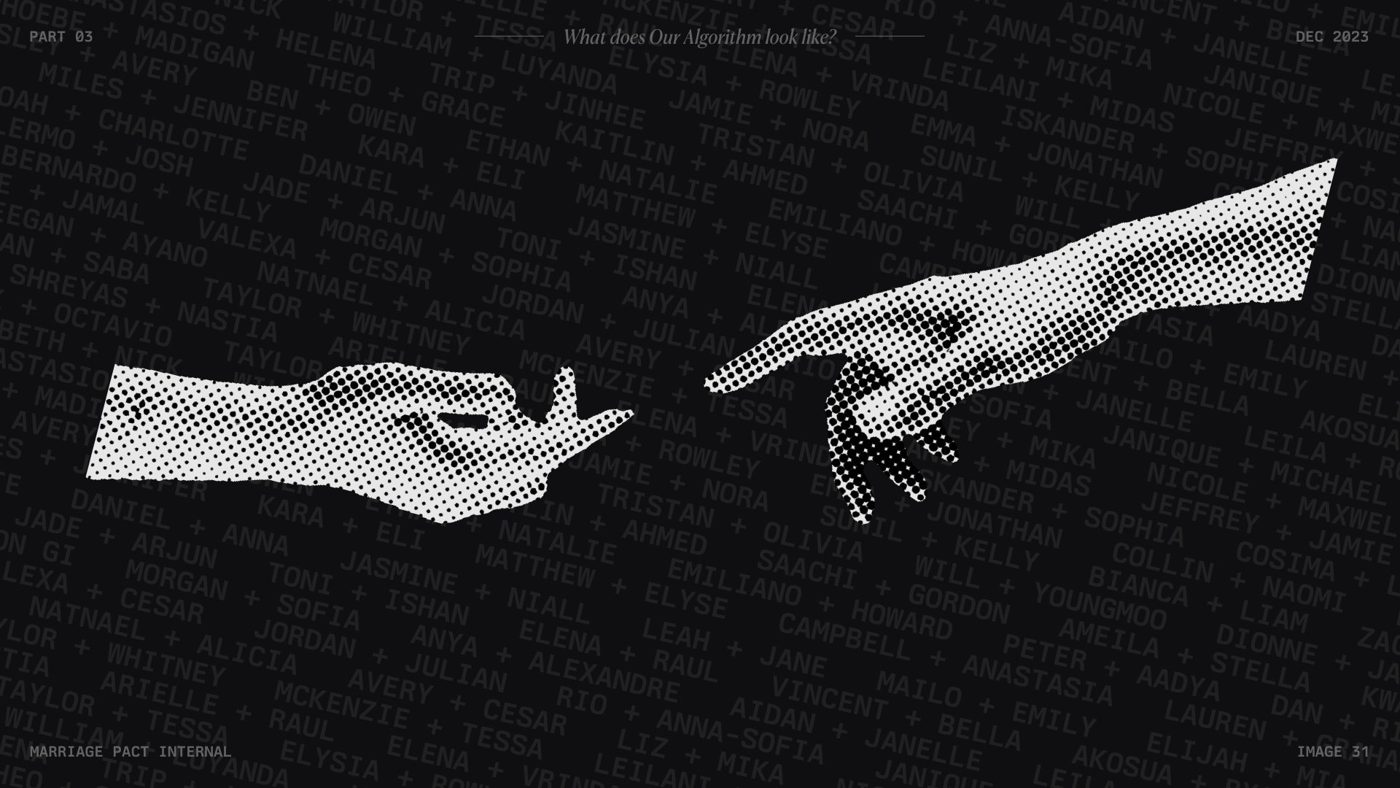
Patterns can be subtle—or bold
Idea 6. Movement (and scale) can convey that the algorithm is weighing myriad possibilities
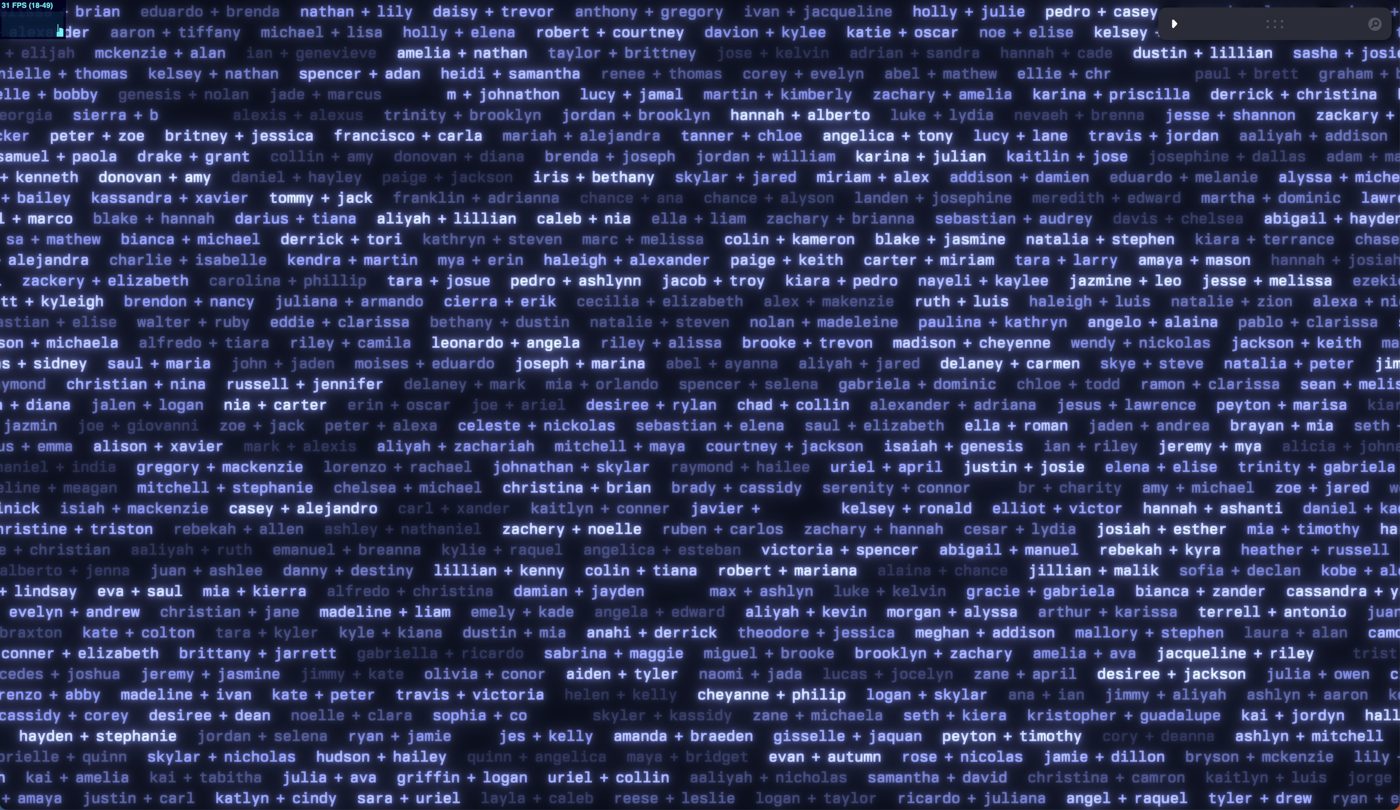
Idea 7. Or we can add bloom to evoke the warm glow of vintage monitors and film
Marriage Pact brand pattern (2023)
Idea 8. We can explicitly call attention to The Algorithm’s presence
UI for Checkmate (2023)
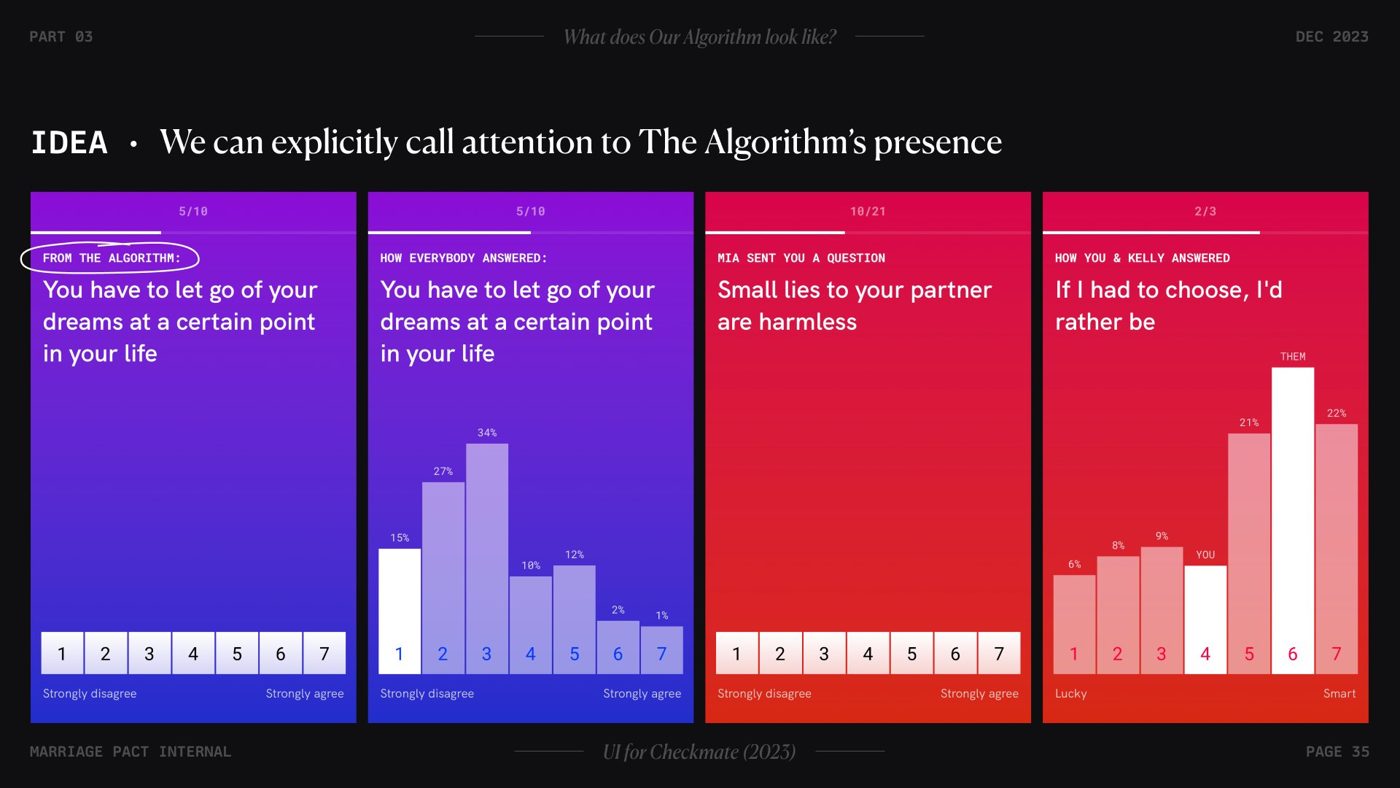
UI for Wavelength (2024)
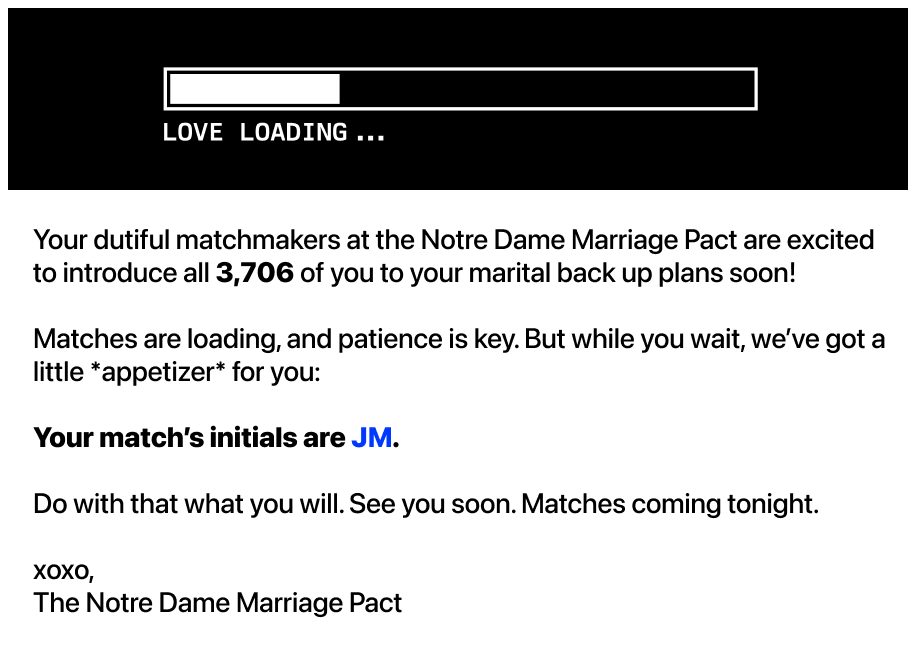
Idea 9. Or we can use loading screens and liminal moments to let users feel its presence
Marriage Pact email (2021)
So, what might The Algorithm look like, and how do I interact with it? Top ideas so far:
Complicated ∩ uncomplicated
Analog ∩ digital
Science fiction ∩ science fact
Weave it into a medium
Use liminal moments
Sometimes, call explicit attention to its presence
What comes next? I don’t know—but here’s what we’re wondering:
What do interactions look like?
How expressive—or neutral—is The Algorithm?
How present or absent does it feel?
How might we use motion expressively?
How might it exude agency, capability, credibility?
And there are many more. Right now, I think there are still more Questions than Answers.
If you want to explore these questions and more, join our team.
We’re hiring product designers with a particular focus on brand and interface design. The most impactful design decisions happen in a room with fewer than 10 people in it. Email me personally and I’ll respond.
Yente from Fiddler on the Roof (1971)
HAL 9000 from 2001: A Space Odyssey (1968)
The Matrix (1999), work by Animal Logic
Ava from Ex Machina (2014), work by DNEG
Joi from Blade Runner 2049 (2017), work by Territory
The Entity from Mission: Impossible – Dead Reckoning (2023), work by Territory
The sonar machine from The Dark Knight (2008), work by BUF
Batman’s contact lens from The Batman (2022), work by Territory
Severance (2022)
The map projected by R2-D2 in Star Wars: The Force Awakens (2015), work by ILM
Jarvis inside Iron Man’s suit from Iron Man 3 (2013), work by Cantina Creative
Proximity Pairing, Apple (2016)
IBM Watson on Jeopardy! (2011)
The OS from Her (2013) and the AI Pin from Humane (2023)
Suggested posts on Instagram, and the presentation of ChatGPT
The presentation of Siri (2016) and the presentation of the algorithm behind YouTube, or TikTok
IBM Debater (2019), work by Perception
Dune (2021), work by Territory
And a variety of designs from the team at Marriage Pact