liammcgregor.com©2026
Works12 of 12
12
Luminar
2016 – 17
Self-driving car company
Early team, special projects
Self-driving car company
Early team, special projects
Plate 1
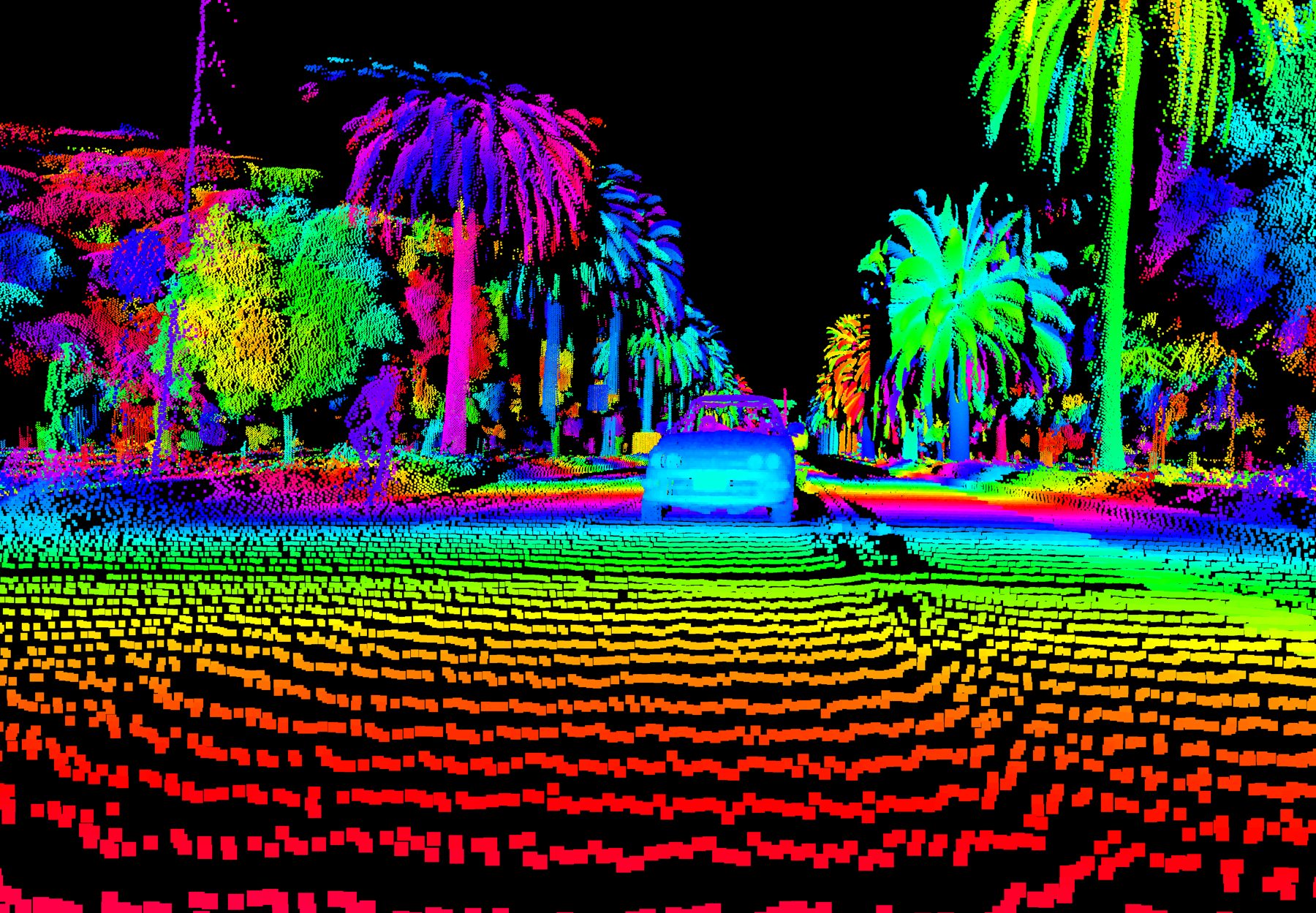
I took this screenshot during a test drive down Palm Drive at Stanford. Here, the sensor is collecting more than a million depth measurements per second, and shows off its range and resolution (unmatched in the industry for a decade). This would become Luminar’s hero image in press for the next six years.
Image of a point cloud, Liam McGregor, using prototype Model G Luminar LiDAR, 27 July 2017.
Luminar was a self-driving car company. We built a LiDAR sensor that could see depth at camera resolution, seeing 50× more detail and 10× farther away than other LiDAR sensors at the time.
I joined the team at Luminar at 15 employees. By the time I left, we’d raised $36 million, were gearing up to raise $200 million more, and had grown to 250 employees. It gave me a front row seat to hyper-growth, and an appreciation for what you can achieve in a fast-growing startup.
I dropped out of school to help build the company, working on it for a year and a half before returning to Stanford. Luminar listed on Nasdaq in December 2020 at a value above $7 billion.
Plate 2
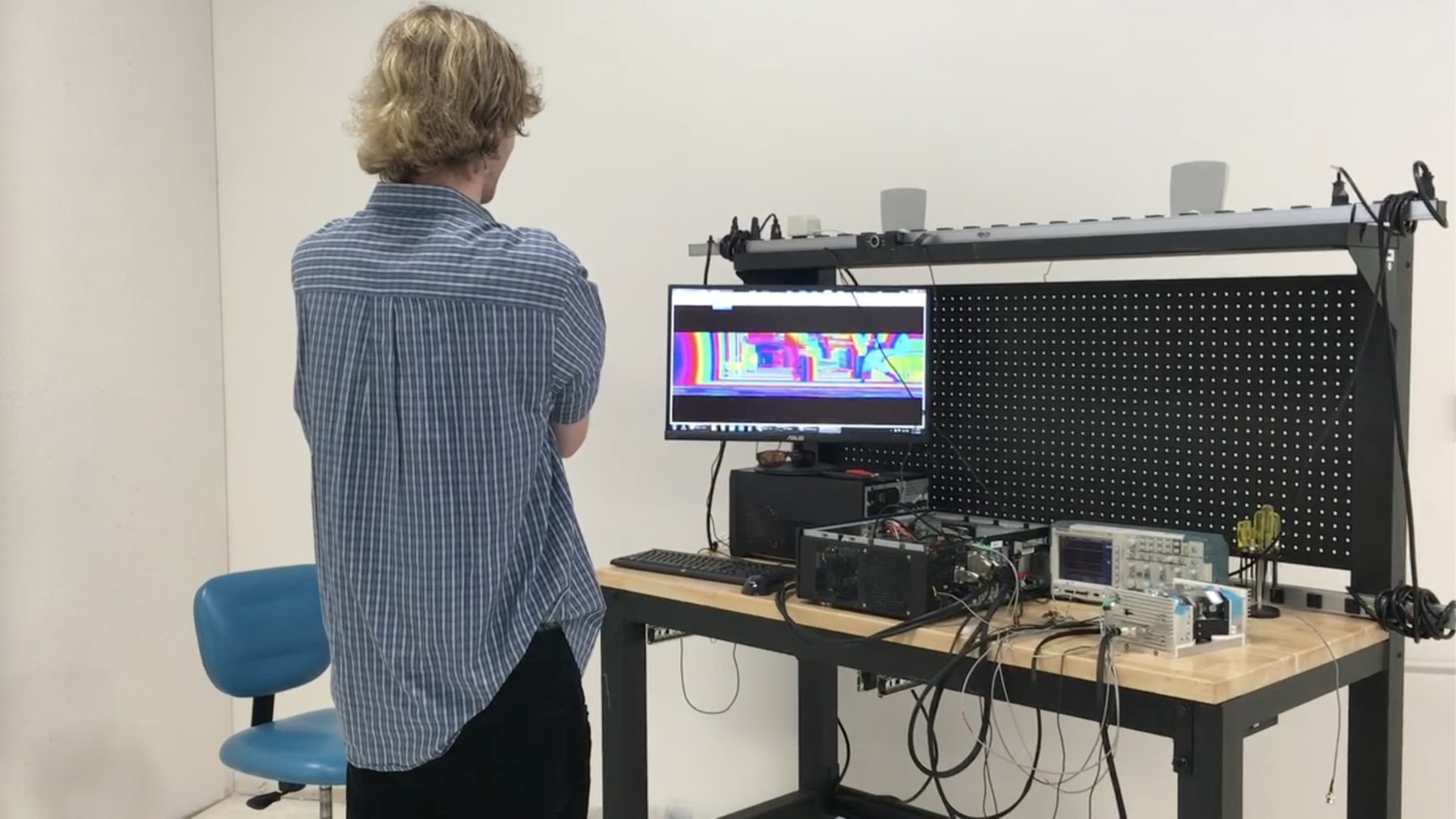
Reviewing the benchtop prototype for Luminar’s Model G sensor at our optomechanical systems design lab in Orlando. One of the first images produced on the new sensor.
Photograph, 12 July 2016.
Plate 3
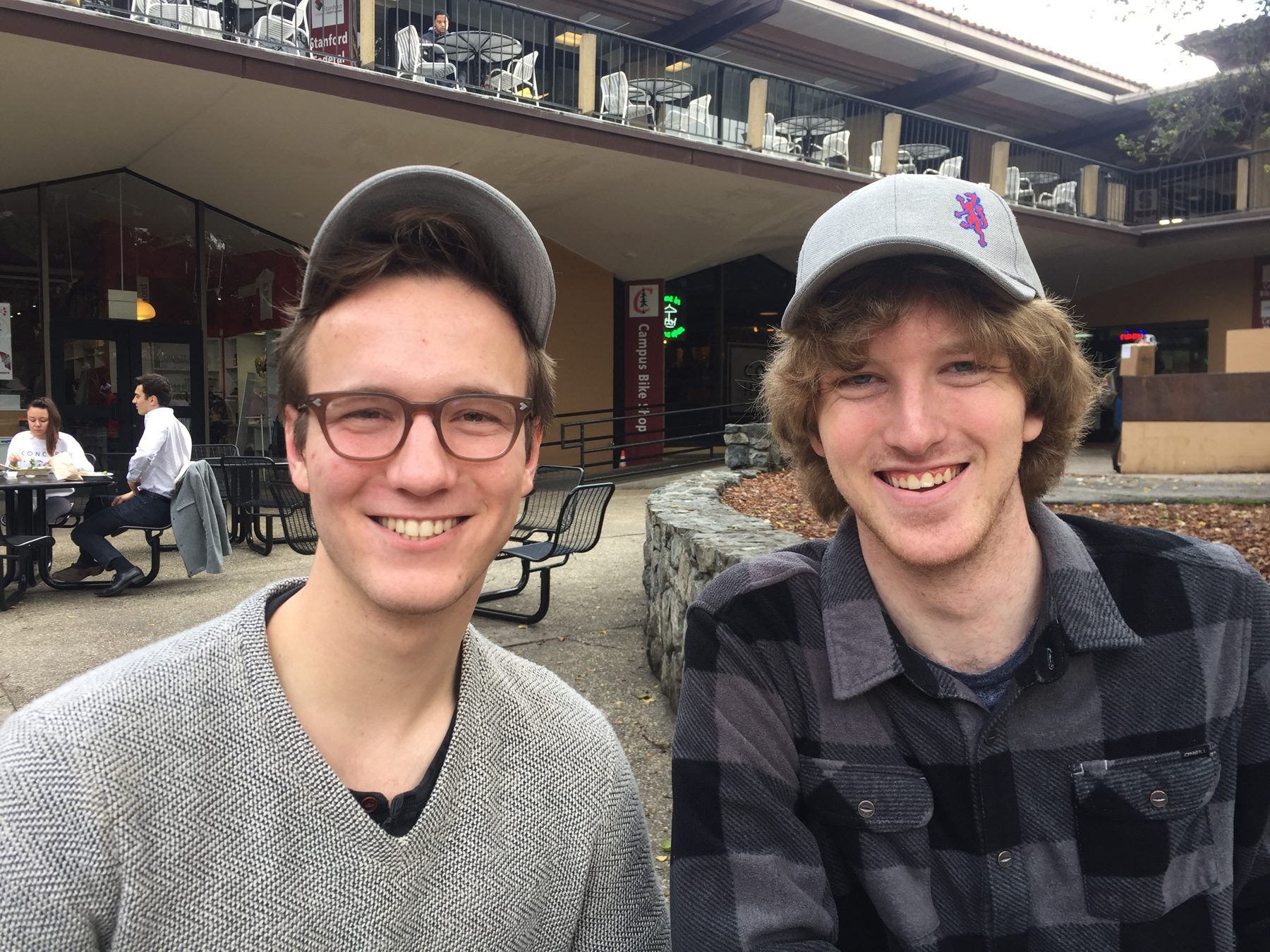
Liam and Austin Russell taking a meeting on the Stanford campus.
Photograph, 9 December 2016.
Plate 4
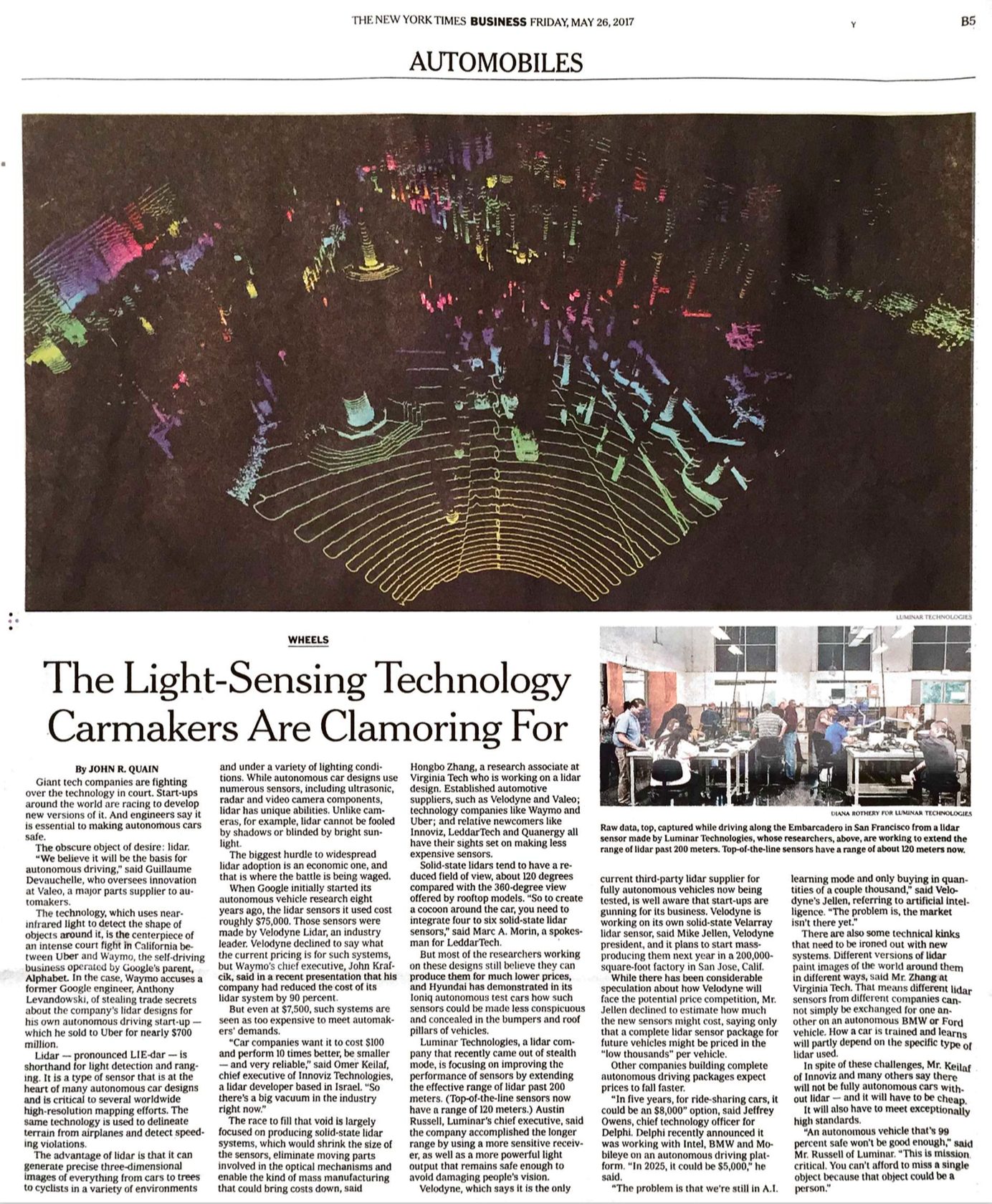
The New York Times on Luminar, a month after the company came out of stealth.
Print edition, The New York Times, 26 May 2017.
Press
Luminar IPO
2020 Dec
Luminar Rises in Market Debut, Making 25-Year-Old Founder a Billionaire
2020 Dec
Meet The World’s Newest, And Youngest, Self-Made Billionaire: Luminar’s Austin Russell
2020 Dec
Luminar going public makes 25-year-old Austin Russell one of world’s first, and youngest, self-driving billionaires television
2020 Aug
Peter Thiel-Backed Startup Luminar to Go Public in $3.4 Billion Merger
Launching Luminar
2017 May
The Light-Sensing Technology Carmakers Are Clamoring For
2017 Apr
Aspiring tech prodigy tries to re-route self-driving cars
2017 Apr
Meet the 22-year-old college dropout who wants to power every future self-driving car
2017 Apr
The promise of self-driving cars starts with better eyesight
2017 Apr
This Sensor Technology CEO Wants To Be In Self-Driving Cars By His 26th Birthday
2017 Apr
Silicon Valley engineer launches driverless car sensor start-up
2017 Apr
A 22-Year-Old CEO Has A Vision For Making Self-Driving Cars A Reality
2017 Apr
New Technology May Help Self-Driving Cars See Better
2017 Apr
College Dropout Says He’s Cracked Self-Driving Cars’ Most Crucial Component
2017 Apr
Luminar makes lidar sensors to help self-driving cars see farther
2017 Apr
Luminar enters autonomous vehicle market with breakthrough lidar
2017 Apr
Luminar reveals sensors that could make self-driving cars safer than human
Set in Redaction from MCKL, Aether Mono from DDOTT and Berkeley Mono from U.S. Graphics Company. ©2026.liammcgregor.com